

Origin and Discovery
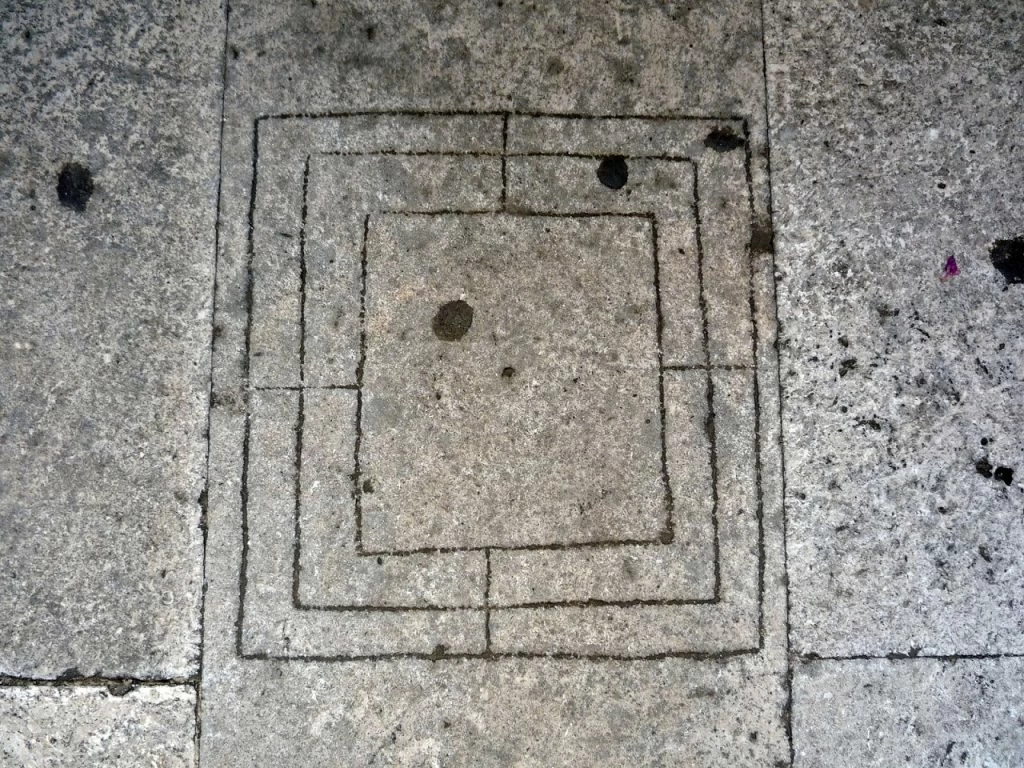
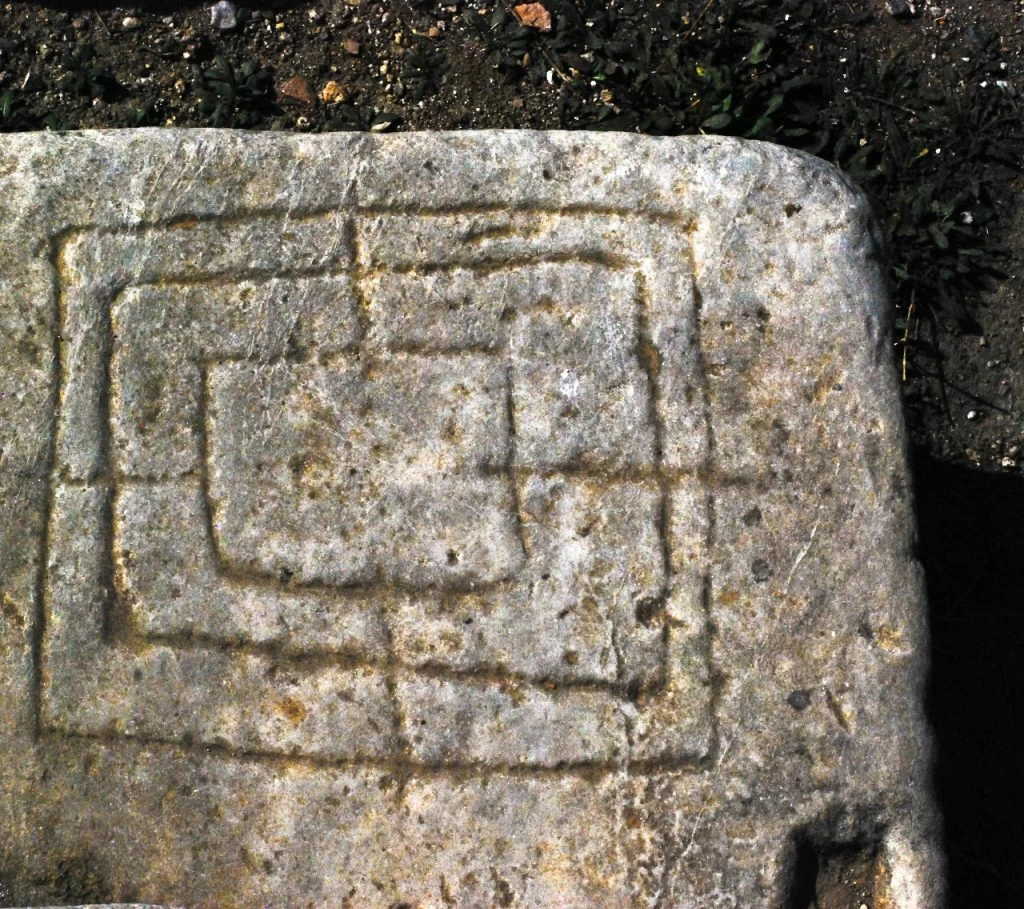
Nine Men’s Morris is a historic game that was widely enjoyed in Ancient Rome and throughout the medieval period. The precise origins of the game are unclear, but the oldest known board is carved into an Egyptian temple at Kurna, dating to around 1400 BCE. However, the exact timing of the carving is uncertain—it could have been created at the time of the temple’s construction or added later. Numerous Nine Men’s Morris boards have been discovered carved into stones across the Roman Empire and in many medieval cathedrals.
Names and Historical Context
The game goes by various names, including Mill, Windmill, and Merrels. The term “Merrels” comes from the Latin word “merellus,” meaning “gaming piece.” The name “Nine Men’s Morris” is thought to have been popularized by William Shakespeare in his play “A Midsummer Night’s Dream” (Act II, Scene I), where Titania refers to the game board, saying, “The nine men’s morris is filled up with mud.”
Game Rules
The rules of Nine Men’s Morris have been well-preserved, partly because the game has been continuously played in Europe since Roman times.
- Players: Two players
- Board: A grid of three concentric squares with lines connecting 24 intersections.
- Pieces: Each player has nine pieces, called “men,” of a unique color.
- Objective: Form a “mill” (three pieces in a row) either horizontally or vertically along the lines.
Phases of the Game
- Placing the Men
- Players take turns placing one piece at a time onto the board’s empty intersections.
- If a player forms a mill, they can remove one of the opponent’s pieces that is not part of another mill. If all opponent pieces are in mills, no pieces can be removed.
- Players can form multiple mills in one move and remove an equivalent number of opponent pieces.
- Moving the Men
- After all pieces are placed, players take turns moving their pieces to adjacent intersections.
- Forming a new mill allows the player to remove an opponent’s piece.
- Pieces cannot jump over others or skip intersections.
- Optional Phase: Flying the Men
- When a player is reduced to three pieces, they can move their pieces to any open intersection, skipping over other pieces if necessary. This phase, known as “flying,” is optional and agreed upon by both players to help balance the game when one player is losing.
Winning the Game
The game concludes when one player is reduced to two pieces, making it impossible to form mills, or when a player has no legal moves left, resulting in a win for their opponent.
Strategy
Nine Men’s Morris is a game of pure strategy, with no element of luck. Effective strategy includes:
- Initial Placement: Focus on strategic positions rather than forming mills immediately.
- Distribution: Spread pieces across the board rather than clustering them.
- Mill Shuttling: Aim to position pieces so that a single piece can move between two mills, allowing continuous removal of opponent pieces.
Bibliography:
Play Nine Men’s Morris Online
Experience this ancient game for yourself! Play against our AI opponent right here in your browser.
How to Play
Phase 1 - Placing: Take turns placing pieces on empty intersections. Form a "mill" (3 in a row along a line) to remove an opponent's piece.
Phase 2 - Moving: Once all pieces are placed, slide pieces along lines to adjacent intersections. Continue forming mills to capture.
Phase 3 - Flying: When you have only 3 pieces left, you can move to ANY empty intersection.
Win: Reduce your opponent to 2 pieces, or block all their moves.
